





In the expansive realm of metallurgical manufacturing, selecting the optimal fabrication methodology is a critical decision that influences component longevity, mechanical integrity, and financial viability. For decades, traditional sand casting has served as a foundational technique within foundries worldwide, relying on temporary moulds crafted from compacted silica sand. However, as contemporary engineering demands increasingly stringent tolerances, superior surface finishes, and enhanced mechanical properties, advanced methodologies have risen to prominence. Chief among these advancements is aluminium gravity die casting, a sophisticated permanent mould technique that introduces a multitude of structural, aesthetic, and operational advantages. Understanding why industrial sectors are progressively transitioning towards this approach requires an analytical evaluation of material behaviour, thermal dynamics, and structural geometry.
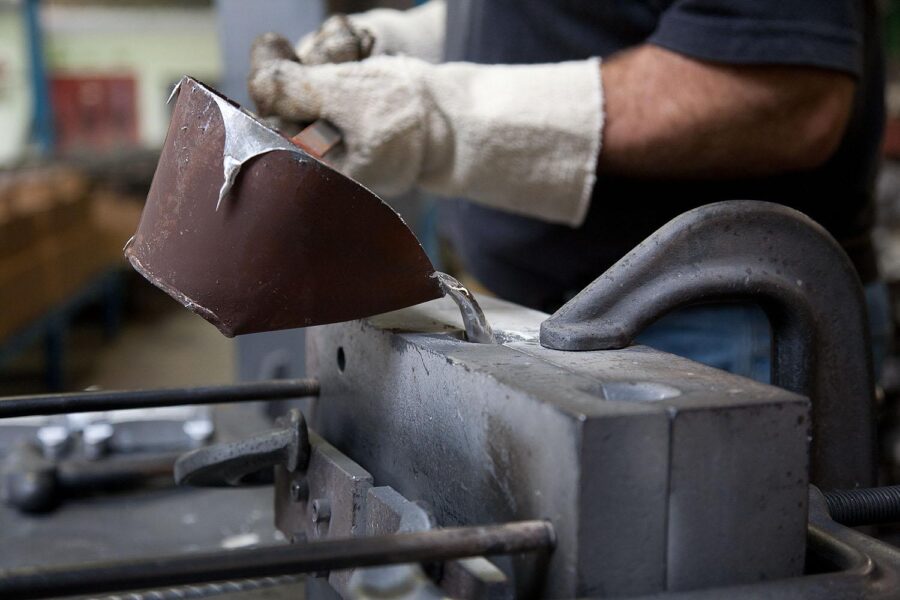
The primary divergence between these two methodologies lies in the nature of the mould itself, which directly governs the solidification pattern of the molten metal. Traditional sand casting utilises a sacrificial mould that must be destroyed to recover the completed component, introducing variability and thermal insulation that can compromise the final product. Conversely, aluminium gravity die casting employs precisely engineered, reusable metallic dies, typically constructed from high-grade iron or steel. This foundational difference alters the entire thermal landscape of the casting cycle, ensuring that aluminium gravity die casting delivers a degree of consistency and material excellence that temporary sand structures cannot replicate. As global industries strive for weight reduction and high-performance components, the reliance on advanced metallic moulds has become an indispensable standard.
Metallurgical Superiority and Rapid Thermal Solidification
The metallurgical characteristics of a finished component are fundamentally dictated by the rate at which the liquid metal transitions into a solid crystalline matrix. When evaluating aluminium gravity die casting against sand alternatives, the thermal conductivity of the mould material emerges as a decisive factor. Reusable steel or iron dies possess a significantly higher thermal conductivity than compacted silica sand, which acts as a natural insulator. Consequently, the molten alloy introduced during aluminium gravity die casting undergoes exceptionally rapid cooling, prompting immediate nucleation and preventing the expansive growth of large metallic grains. This rapid solidification is a primary reason why engineers favour the permanent mould approach for structurally critical components.
This rapid cooling phenomenon directly manifests as a highly refined, dense microstructure characterised by a minimised secondary dendrite arm spacing. In practical terms, the fine grain structure yielded by aluminium gravity die casting substantially elevates the mechanical properties of the finished component, yielding vastly superior tensile strength, greater elongation, and enhanced fatigue resistance. Sand casting, by contrast, suffers from sluggish heat dissipation, which often results in a coarse macrostructure vulnerable to micro-porosity and internal structural voids. For applications subjected to cyclic loading, elevated pressures, or harsh environmental exposure, the dense and reliable matrix achieved through aluminium gravity die casting represents a vital guarantee of operational safety and structural longevity.
Dimensional Precision and Geometric Consistency
Achieving exact dimensional tolerances is a continuous challenge within foundry environments, particularly when handling intricate geometries or thin-walled architectures. The application of aluminium gravity die casting provides an elegant resolution to this challenge by utilising rigid, dimensionally stable metallic dies that resist deflection under the hydrostatic pressure of the liquid metal. Because the die remains structurally unaltered throughout thousands of production cycles, aluminium gravity die casting ensures that every single component produced matches its digital design counterpart with remarkable fidelity. This level of repeatability is simply unachievable when relying on sand moulds, which are prone to subtle erosion, core shifting, and wall movement during the pouring process.
The inherent instability of sand moulds necessitates generous machining allowances, forcing engineers to specify thicker walls and excess material that must subsequently be removed via costly secondary machining. Aluminium gravity die casting bypasses this wasteful requirement by maintaining tight tolerances across successive production batches, thereby allowing for near-net-shape manufacturing. By minimising the volumetric variance from one component to the next, aluminium gravity die casting reduces the burden on CNC machining centres, reduces cutting tool wear, and accelerates assembly throughput. In sectors where fractions of a millimetre dictate the success or failure of a mechanical system, the geometric certainty provided by permanent metallic moulds is an invaluable asset.
Surface Integrity and Aesthetic Refinement
The surface texture of an industrial component is not merely an aesthetic consideration but a critical factor influencing aerodynamic efficiency, fluid dynamics, and localised stress concentrations. Sand casting naturally imparts a rough, granular surface texture onto the metal as the molten alloy takes on the negative impression of individual sand grains. To mitigate this coarse finish, extensive shot blasting, grinding, and polishing are frequently required. In stark contrast, the polished, machined internal surfaces of the metallic cavities utilised in aluminium gravity die casting impart a smooth, uniform, and visually appealing surface finish directly from the mould.
This superior surface profile, characteristic of aluminium gravity die casting, substantially reduces the risk of fatigue crack initiation, which frequently begins at surface irregularities or micro-notches inherent to rougher casting methods. Furthermore, components fabricated via aluminium gravity die casting are immediately receptive to subsequent surface treatments, such as anodising, powder coating, or chromate conversion, requiring minimal preparatory blasting or chemical etching. The elimination of these laborious surface preparation stages significantly shortens production timelines, while simultaneously enhancing the aesthetic value and corrosion resistance of the final components across their operational lifespan.
Mitigation of Porosity and Gas Entrainment
Internal porosity is a persistent challenge in foundry engineering, acting as a hidden defect that can severely compromise the pressure tightness and structural capacity of a component. In sand casting, the organic binders, chemical additives, and moisture content within the sand matrix vaporise upon contact with the superheated molten alloy, generating substantial volumes of gas. If the permeability of the sand mould is insufficient, these gases become entrapped within the solidifying metal, forming gas blowholes and pervasive micro-porosity. Aluminium gravity die casting inherently eliminates this specific vulnerability by utilising non-porous, completely dry metallic moulds that do not generate volatile gases during the casting sequence.
Moreover, the process of aluminium gravity die casting permits the integration of highly sophisticated, permanent venting channels and optimal runner geometry within the die design itself. This ensures that as the molten alloy enters the cavity under the natural force of gravity, the displaced air is efficiently and completely evacuated from the mould space. The combination of rapid solidification and controlled gas evacuation ensures that aluminium gravity die casting yields components with exceptional pressure tightness. This makes the technique uniquely suited for fluid-handling components, hydraulic manifolds, and engine elements that must contain high-pressure fluids or gases without suffering from structural weeping or catastrophic leakage.
Long-Term Economic Viability and Production Scaling
While the initial capital expenditure associated with designing and machining precision steel dies can be substantial, the long-term economic model heavily favours aluminium gravity die casting for medium-to-high volume production runs. Sand casting involves a recurring, labour-intensive process of creating a new mould for every single pour, a requirement that incurs ongoing labour costs, material handling expenses, and sand reclamation outlays. Conversely, the reusable nature of the tooling in aluminium gravity die casting distributes the initial investment over thousands of components, resulting in a steadily declining unit cost that quickly undercuts the cumulative expenses of sand foundry operations.
Beyond the direct cost of the mould, the operational velocity achieved through aluminium gravity die casting enhances overall factory productivity. The cycle time for a permanent mould is significantly shorter than that of a sand system, as there is no need to wait for sand mixing, core packing, or box assembly between cycles. Once the metallic die is brought to its optimal operating temperature, the process of aluminium gravity die casting can be repeated rapidly and efficiently. This accelerated throughput, combined with drastically reduced scrap rates due to fewer internal defects, elevates the overall profitability and market competitiveness of the manufacturing operation.
Environmental Sustainability and Resource Efficiency
In the contemporary manufacturing landscape, environmental stewardship and resource conservation are no longer peripheral concerns but core operational imperatives. Sand casting operations consume vast quantities of silica sand, chemical binders, and catalytic agents, much of which eventually degrades into a contaminated waste stream requiring specialised disposal in landfills. Aluminium gravity die casting presents a far cleaner, more sustainable alternative by virtually eliminating the reliance on disposable moulding media. The durable steel dies used in aluminium gravity die casting endure for tens of thousands of cycles, generating minimal process waste and drastically reducing the environmental footprint of the foundry.
Furthermore, the near-net-shape capability inherent to aluminium gravity die casting translates directly into superior material utilisation. Because the components are cast with high precision and minimal machining allowances, less raw alloy is converted into machining chips and metal shavings, which would otherwise require energy-intensive remelting and recycling. This reduction in material waste, coupled with the long operational life of the permanent tooling, ensures that aluminium gravity die casting aligns seamlessly with modern green manufacturing standards and circular economy principles. By optimising energy inputs and reducing raw material consumption, the permanent mould process provides a responsible pathway forward for sustainable industrial development.
Strategic Integration and Engineering Synergy
Ultimately, the decision to implement aluminium gravity die casting over traditional sand methods represents a strategic alignment of product design, material science, and manufacturing efficiency. The transition to aluminium gravity die casting empowers design engineers to specify thinner walls, lighter structural profiles, and more complex geometric configurations without sacrificing structural safety or component performance. This design freedom allows for significant weight reduction, a critical parameter in modern transportation, aerospace, and industrial machinery sectors where energy efficiency is paramount.
When all engineering and financial factors are balanced—including refined metallurgical grain structures, superior dimensional accuracy, exceptional surface finishes, minimised internal porosity, and long-term production economies—the advantages of aluminium gravity die casting become indisputable. While sand casting remains a viable methodology for low-volume prototypes or exceptionally massive individual structures, aluminium gravity die casting stands out as the definitive choice for high-quality, high-reliability components. By embracing the precision, consistency, and structural integrity offered by this permanent mould methodology, manufacturers can ensure their products meet the rigorous standards of modern engineering, securing a distinct advantage in an increasingly competitive global marketplace.