




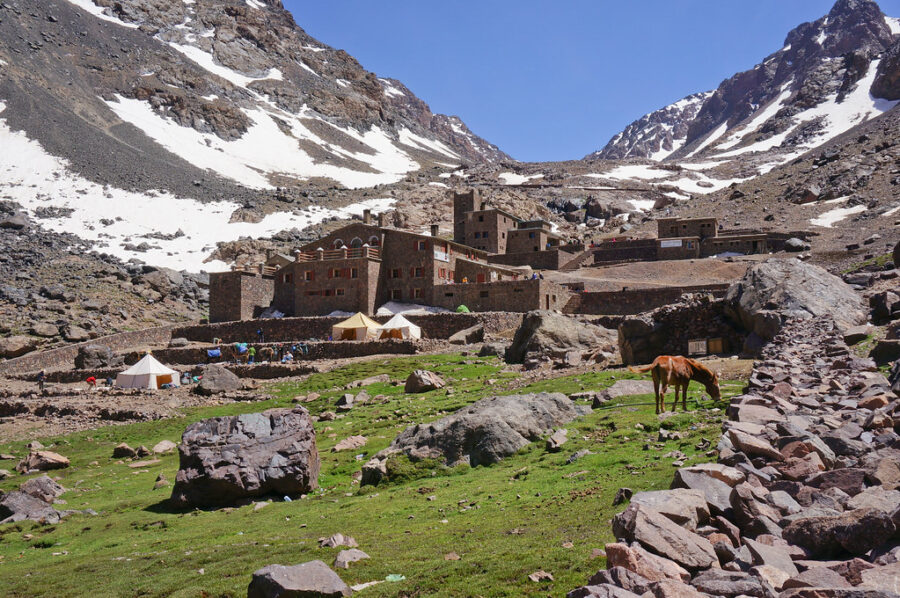
There are mountains that are merely climbed, and there are mountains that are experienced — peaks whose ascent involves not just physical challenge but genuine transformation, a journey through landscape and culture and self that stays with the climber long after the summit has been reached and the boots have been stored away. Mount Toubkal belongs emphatically to the second category. Rising to 4,167 metres above sea level in the High Atlas range of Morocco, it is the highest peak in North Africa and one of the most rewarding trekking destinations anywhere in the world. For those who have stood on its summit and looked out across a landscape that stretches from the Sahara in the south to the distant glimmer of the Atlantic in the west, the experience is one that defies adequate description and demands to be lived rather than simply read about.
Why Mount Toubkal Draws Trekkers From Around the World
The appeal of Mount Toubkal as a trekking destination operates on several levels simultaneously. At the most fundamental level, it offers a genuine high-altitude mountaineering experience that is accessible to fit, well-prepared trekkers without requiring technical climbing skills or specialist equipment for most of the year. This accessibility — relative to other peaks of comparable altitude — makes it an ideal objective for adventurous travellers who want to test themselves against a serious mountain without the extended technical training that routes on the Himalayas or the more demanding Alpine peaks demand.
Yet accessibility does not mean easy, and part of the enduring appeal of Mount Toubkal is that it asks something real of everyone who attempts it. The ascent is physically demanding, the altitude presents genuine physiological challenges, and the mountain’s weather can change with a speed and severity that commands respect and thorough preparation. The combination of achievability and genuine challenge is precisely the quality that makes an ascent of Mount Toubkal so satisfying — it is a mountain that rewards effort with an experience proportionate to the commitment it requires.
Beyond the physical challenge, the cultural and environmental richness of the Mount Toubkal region adds dimensions to the experience that set it apart from mountain trekking in more heavily developed destinations. The High Atlas is Berber country — the homeland of the Amazigh people whose culture, language, and way of life have persisted in these mountains for millennia. The villages encountered on the approach to the mountain, the traditional architecture of the stone and earthen houses that cluster on hillsides above terraced fields, and the warmth of the hospitality extended to visitors create a human context for the trekking experience that is as memorable as the mountain itself.
The Standard Route: What to Expect on the Ascent
The most commonly followed route to the summit of Mount Toubkal begins in the village of Imlil, a small Berber settlement at approximately 1,740 metres altitude that serves as the primary gateway to the high mountain region and is reached by road from Marrakech in approximately ninety minutes. From Imlil, the trail climbs steadily through the Mizane Valley, passing through the larger village of Aroumd before ascending through increasingly dramatic mountain terrain to the Toubkal Refuge at approximately 3,207 metres — the standard overnight base for summit attempts.
The refuge, managed by the Club Alpin Français, provides dormitory accommodation, basic meals, and the social atmosphere of a mountain hut shared with fellow trekkers from around the world. Staying at the refuge before the summit push is both practically sensible — allowing time for acclimatisation at altitude and ensuring an early start the following morning — and intrinsically enjoyable, with the evening views across the surrounding peaks and the camaraderie of the shared pre-dawn preparations adding texture to the overall experience.
The summit day ascent from the refuge to the top of Mount Toubkal typically takes between three and five hours depending on conditions, fitness, and the time of year. The route climbs initially across rocky terrain before entering the South Cwm — a steep, boulder-filled gully that provides the most demanding section of the standard route. Above the cwm, the gradient eases slightly as the path approaches the summit ridge, where the final steps to the highest point in North Africa are taken amid views of increasing and eventually overwhelming grandeur. The descent to the refuge and then back to Imlil is typically completed on the same day, making the standard route a two-day itinerary that fits comfortably within a long weekend from many European cities.
Winter Trekking and the Snow-Covered Mountain
While Mount Toubkal can be attempted in most months of the year, the experience changes dramatically with the seasons, and the winter ascent — typically from December through to April — is a genuinely different and in many ways more spectacular undertaking than the summer route. Snow covers the mountain from late autumn, transforming the landscape into something of extraordinary beauty — the stark contrast between the white peaks and the blue African sky creates a visual drama that the summer mountain, with its exposed rock and ochre scree, cannot match.
Winter and early spring ascents of Mount Toubkal require additional equipment and preparation beyond what the summer route demands. Crampons and ice axes are essential for safe travel on the snow and ice-covered approaches and summit slopes, and the ability to use this equipment correctly is a prerequisite for safe winter mountaineering on the mountain. The cold temperatures — which can drop to minus twenty degrees Celsius or below at summit altitude in winter — demand appropriate layering systems and sleeping equipment, and the reduced daylight hours require careful timing of the summit attempt.
The additional challenge of the winter ascent is amply rewarded by the beauty of the mountain in its snow-covered state and the particular satisfaction that comes from completing a more technically demanding objective. Many experienced trekkers who have climbed Mount Toubkal in summer return specifically to experience the winter mountain, finding that the two experiences complement each other in ways that deepen the overall relationship with this extraordinary peak.
Preparation and Fitness for the Ascent
The physical preparation appropriate for a Mount Toubkal ascent depends on the time of year, the route chosen, and the individual’s baseline fitness, but some principles apply universally. Cardiovascular fitness is the primary physical requirement — the sustained aerobic effort of a full day’s mountain walking at altitude demands a solid fitness base that is best built through regular running, cycling, swimming, or hillwalking in the months preceding the trek. Leg strength, particularly the eccentric strength required for prolonged descending on rocky terrain, is worth developing specifically through hill training and weighted squats.
Altitude acclimatisation is an important consideration for anyone unaccustomed to elevation. Whilst Mount Toubkal’s summit altitude of 4,167 metres is below the threshold at which severe altitude sickness typically becomes a significant concern for properly acclimatised trekkers, the speed of ascent on the standard two-day route means that some individuals will experience mild altitude symptoms — headache, fatigue, reduced appetite, and disrupted sleep. Ascending slowly, maintaining good hydration, and being willing to rest or descend if symptoms become pronounced are the sensible precautions that allow the vast majority of well-prepared trekkers to complete the ascent safely and enjoyably.
Guides and the Value of Local Expertise
The question of whether to trek Mount Toubkal independently or with a licensed local guide is one that every prospective trekker considers, and the case for engaging a knowledgeable guide is compelling on multiple levels. Practically, a local guide with deep familiarity with the mountain’s routes, conditions, and weather patterns adds a dimension of safety and navigational confidence that is particularly valuable in winter conditions or when cloud reduces visibility on the upper mountain. Culturally, a Berber guide from the High Atlas brings an understanding of the region’s history, ecology, and human geography that transforms the trekking experience from a physical challenge into a genuine encounter with one of the most fascinating mountain cultures in the world.
The licensing system for mountain guides in Morocco ensures that registered guides have met training and competency standards appropriate to the terrain they are leading clients through. Engaging a licensed guide also contributes directly to the economic wellbeing of the Berber communities whose homeland the mountain occupies — a dimension of responsible travel that sits comfortably with the values of the mindful adventurer.
Mount Toubkal rewards those who approach it with preparation, respect, and openness to the full richness of what it offers. It is, quite simply, one of the great mountain experiences available to the travelling world.
Get in Touch:
Toubkal Trekking
Appartement A2, Bourj Ourika, Immeuble D, Marrakech 40000, Morocco
+212 6 62 16 06 90
toubkal-trekking.com